
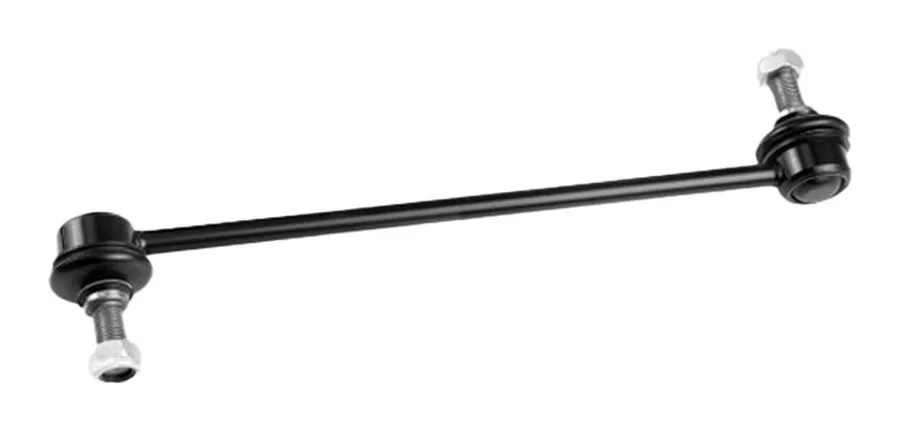
A stabiliser link connects each end of the stabiliser bar, or anti-roll bar, to the suspension: to the strut, the control arm or the axle, depending on the layout. When the car leans in a corner, the link on the loaded side pushes on the bar, the bar twists, and it lifts the unloaded side. That resistance to body roll keeps more of the tyre on the road.
The link is a short steel rod with a sealed ball joint at each end, so it can follow the suspension without binding. Because it moves with every bump, the two joints are the parts that wear; a torn boot lets water and grit in and the joint develops play.
FUHRLENK stabiliser links are made to the length and the stud angles of the original and are fitted with sealed ball joints at both ends. They are made to OEM-compliant quality and tested for durability and temperature resistance.
The range covers European and Japanese passenger cars. Each reference is identified by the OE number of the original part; send that number and the vehicle identification number (VIN) and we confirm the matching FUHRLENK reference.
For availability and OE cross-references, contact us by email.